
I did not arrive at the Norway resilience model because I was researching fjords, oil funds or emotionally restrained knitwear. I arrived there while thinking about AI, and more specifically what happens when AI does not just change work, but removes some of it.
The usual answer is that people must adapt, which is true. And incomplete. Adaptation is not only an individual act. It is a system responsibility.
That is what led me to the Norway resilience model. Not because Norway is perfect. Not because it offers a neat copy-and-paste answer for every country or business now staring at AI disruption with the expression of a person who has just realised the “quick update” meeting is actually a restructuring conversation wearing a fake moustache.
The Norway resilience model is useful because it appears to understand something we keep pretending not to know: resilience is not only a personal trait. It is a design outcome.
The flaw in the resilience conversation
Most of the modern resilience conversation still places too much responsibility on the individual. Be tougher. Breathe deeper. Meditate harder. Reframe the challenge. Think positive thoughts while the building burns down around you and someone from HR calmly asks whether you have tried gratitude journaling near the fire exit. Become the sort of person who can absorb endless ambiguity, constant urgency, shifting priorities, broken communication and a calendar that looks like it was designed by a raccoon with a caffeine problem and access to Outlook.
There is value in personal resilience. Of course there is. People do need responsibility, flexibility, energy management and the ability to act when life refuses to behave. But resilience is also shaped by the system around them: the support, buffers and preventative measures that stop every shock landing directly on the individual.
This is where the rugged individualism story starts to fall apart.
It tells people to carry more. It rarely asks whether the system should be designed to make them carry less unnecessary strain in the first place.
AI makes that question unavoidable. If AI creates new work, people will need to learn. If AI changes existing work, people will need to adapt. If AI removes work, people will need routes into something else. But none of that happens magically because someone in leadership says “agility” seventeen times in a town hall while standing in front of a slide with a mountain on it.
Adaptation needs architecture, and this is where the Norway resilience model becomes interesting.
What the Norway resilience model teaches us
When Norway discovered oil, it could have behaved like someone who had just won the lottery and immediately bought a speedboat, a gold bath, three decorative tigers and a private island shaped like their own head. Spend the money. Enjoy the moment. Let future Norway deal with future Norway’s problems.
Instead, Norway did something unusually sensible. It paused, which is deeply annoying for the rest of us, because pausing before doing something stupid is exactly the sort of advice we all technically know and then ignore the moment Amazon offers one-click ordering.
The Norway resilience model starts with a simple recognition: oil was not just a national jackpot. It was also a risk. A lot of sudden money can make people stupid. Countries are not immune to this. Sudden wealth can make governments short-term, create dependency, inflate expectations and convince everyone the good times will simply keep rolling because, for a while, they do.
Norway seems to have looked at all this and said: let’s not be idiots.
So it built buffers.
Rather than spending all the oil money as it came in, Norway created a sovereign wealth fund. Which sounds complicated, but the basic idea is not. It is a giant national savings-and-investment pot designed to stop the country from blowing the future on today’s shiny object.
The Norway resilience model also created rules around how much of that money could be used each year. This matters because humans are terrible at restraint when there is a large pot of money nearby. The rule protects tomorrow from today, and that is the bit that matters.
The Norway resilience model treated volatility as something to design around, not something to dump onto ordinary people later like a flaming bag of economic consequences.
The point is not that Norway got everything right. It did not. Norway has advantages most countries and businesses cannot replicate: oil wealth, a small population, strong institutions, high trust and a particular historical context. It also has contradictions, including the very obvious one that much of its resilience architecture was funded by fossil-fuel wealth. There is a climate elephant in the room, and it is wearing an expensive wool jumper.
So the Norway resilience model is not a map. It is a compass. It asks, how do we stop today’s pressure from consuming tomorrow’s capacity? And that matters as much to businesses as it does to countries.
What businesses can learn
The first lesson is simple: resilience requires buffers, not just bravery. The Norway resilience model did not rely only on citizens being individually strong. It built mechanisms to absorb volatility before that volatility landed directly on households, workers and the public budget.
Businesses need the same logic. A company with no buffer is not efficient. It is brittle with a good haircut.
Many organisations run teams at permanent maximum capacity and then act surprised when the smallest disruption creates collapse. They call it lean. Often it is just under-designed. A system with no slack has no room to think, no room to absorb shocks, no room to recover, and no room to learn. It can only react.
That is not resilience. That is a very tidy accident waiting for a calendar invite. It is the corporate equivalent of driving down the motorway with no spare tyre, no fuel, no brakes, and a leadership team in the back saying, “Let’s maintain momentum.”
The second lesson is that volatility must be translated before it becomes panic. The Norway resilience model did not let oil money rush straight into the system without restraint. It created a buffer between the shock of sudden wealth and the daily running of the country.
Businesses need translation layers too.
Too many organisations allow market pressure, board anxiety, competitor noise, client demands or leadership panic to pass straight through the system and land on employees as urgency. Everything becomes a priority. Everything becomes now. Everything becomes a Teams message with “quick one” in the subject line, which is almost never quick and rarely just one.
The job of leadership is not to amplify every shock. It is to interpret it.
Leaders need to decide what the shock means, what matters, what does not, what changes, what stays stable, and what people should stop doing so they have the capacity to do what now matters. That means clearer prioritisation, better operating rhythms, stronger decision rights, scenario planning, capacity reviews, escalation rules and communication discipline.
It also means leaders must stop using the organisation as a nervous system for their own anxiety. Because when leadership anxiety travels unfiltered through a business, it does not arrive as strategy. It arrives as noise. Then everyone starts running in different directions like startled meerkats in branded fleece.
The third lesson is that businesses must protect will, not only resources. Simon Sinek’s distinction between will and resources is useful here. Resources are the tangible things businesses already love measuring: revenue, profit, EBITDA, cash, assets, headcount. These are easy to see. They sit on dashboards. They look impressive in board packs. They wear little financial waistcoats and say things like “quarter-on-quarter improvement.”
Will is harder to measure: morale, motivation, inspiration, commitment, trust, energy and desire to engage. Will is the invisible bit, which means many businesses treat it like office plumbing: ignored until something smells deeply wrong.
Most businesses over-measure resources and under-measure will. Then they act surprised when the resources still look acceptable but the people system has quietly started to rot underneath them.
Trust is part of will. So is belief. So is commitment. So is the willingness to keep contributing when the environment becomes harder. If leaders do not measure or protect those things, they should not be shocked when the system loses resilience long before the financial dashboard admits anything is wrong.
This is why trust is not a soft cultural bonus. Trust is resilience infrastructure.
Low-trust organisations waste enormous amounts of energy. People cover themselves. They second-guess decisions. They hide bad news. They perform confidence instead of surfacing reality. A high-trust system moves faster because less energy is spent on self-protection.
That does not mean everyone is happy all the time. It means reality can move through the system without being punished, distorted or buried. It means people can say, “This is not working,” before “this is not working” becomes a resignation letter, a client loss or a leadership offsite with the emotional texture of a damp spreadsheet.
The business systems translation
The Norway resilience model is national, but the principle translates cleanly into business. The lesson is not to copy Norway. The lesson is to stop treating resilience as a heroic personality trait and start treating it as a design responsibility.
| What the Norway resilience model teaches us | What businesses should learn |
|---|---|
| Sudden wealth can become a risk if it is not managed properly. | Sudden growth, disruption or opportunity can overwhelm a business if the system has no discipline. |
| Buffers protect the future from today’s pressure. | Teams need capacity reserves: time, attention, energy and talent that are not instantly consumed by the current quarter. |
| Rules stop short-term temptation from raiding long-term security. | Priority discipline matters. No new priority should arrive without something else being paused, removed or deprioritised. |
| Volatility should be absorbed before it reaches ordinary people. | Leaders must interpret external pressure instead of dumping every market wobble onto employees as urgency. |
| Trust makes restraint possible. | People will accept hard decisions when they believe leaders are honest, consistent and not hiding the truth behind a cheerful intranet post. |
| Long-term resilience is designed before the crisis. | Businesses need to measure strain before performance cracks, not after the people system has already started leaking smoke. |
That is the part many businesses miss. They are not building resilience. They are extracting capacity while calling it performance. They are chopping down the orchard, selling the apples, congratulating themselves on record fruit revenue, and then acting surprised next year when the trees have failed to show adequate commitment.
Why this matters for AI
AI is going to test whether businesses have built real resilience or whether they have simply been relying on people to absorb whatever the system refuses to design properly.
If AI increases the speed of work, cognitive capacity becomes a resilience issue. If AI changes the nature of work, learning capacity becomes a resilience issue. If AI makes some roles redundant, transition capacity becomes a resilience issue. If AI creates uncertainty faster than leaders can explain it, trust becomes a resilience issue.
The companies that handle this well will not be the ones that simply shout “reskill” from the balcony and hope everyone finds the correct online course before the floor disappears. They will be the ones that design the transition.
They will identify where work is changing. They will be honest about what is being automated, augmented or removed. They will build pathways. They will protect learning time. They will communicate before rumour becomes the internal operating system. They will measure strain as the system changes, not after everyone has quietly reached breaking point.
Because AI does not only challenge jobs. It challenges the architecture around jobs.
The question leaders should be asking
Most organisations still ask whether their people are resilient enough, but the Norway resilience model points us somewhere more useful: what is the system doing to people’s resilience?
That shift matters, because if your business relies on people being endlessly tough, permanently available, emotionally regulated, cognitively sharp and cheerful under constant strain, you have not built a resilient system.
You have built an extraction machine with a values statement.
The strongest systems do not ask people to become infinitely tougher. They build enough capacity so ordinary people are not forced to live permanently at breaking point.
And if AI is about to test every assumption we have about work, capacity, learning and value, then designing that kind of resilience is no longer a nice idea. It is the work.
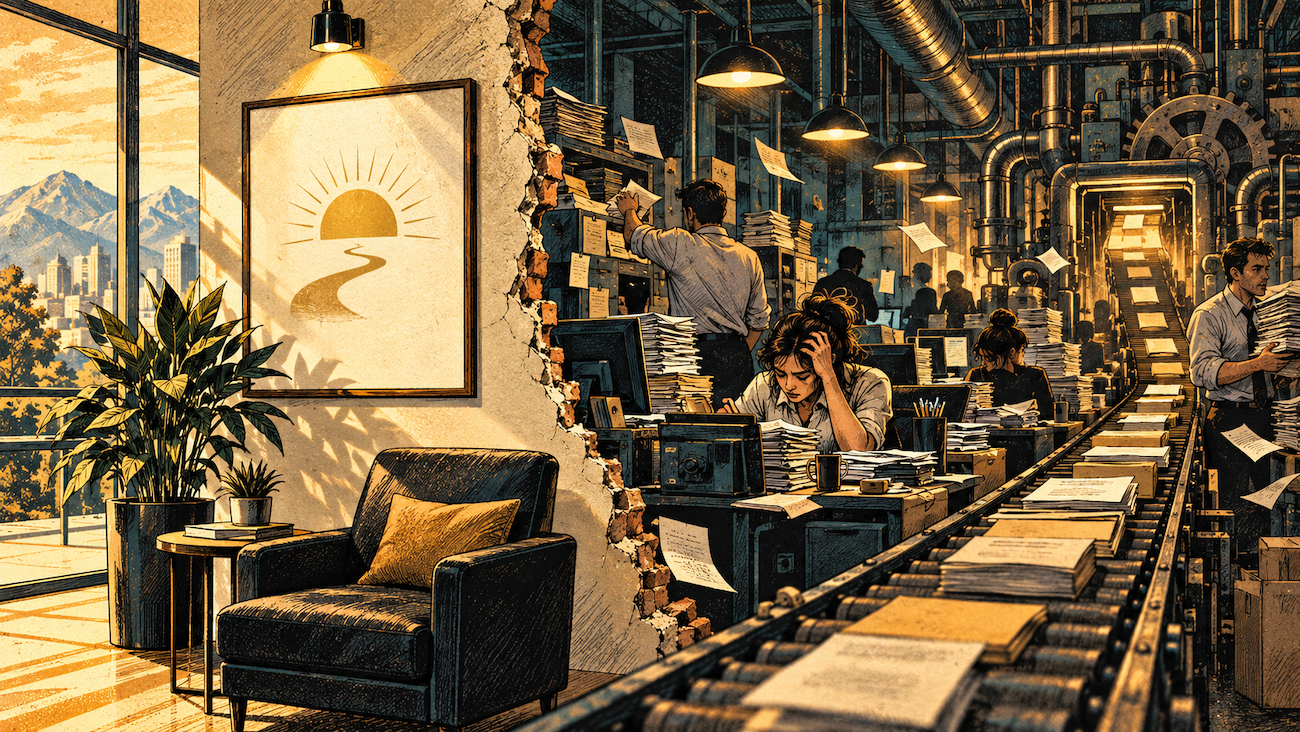
Systems Thinking in Business: Is Your Purpose the One on the Wall?
Systems thinking in business shows how elements, interconnections and purpose reveal what an organisation is really built to do.
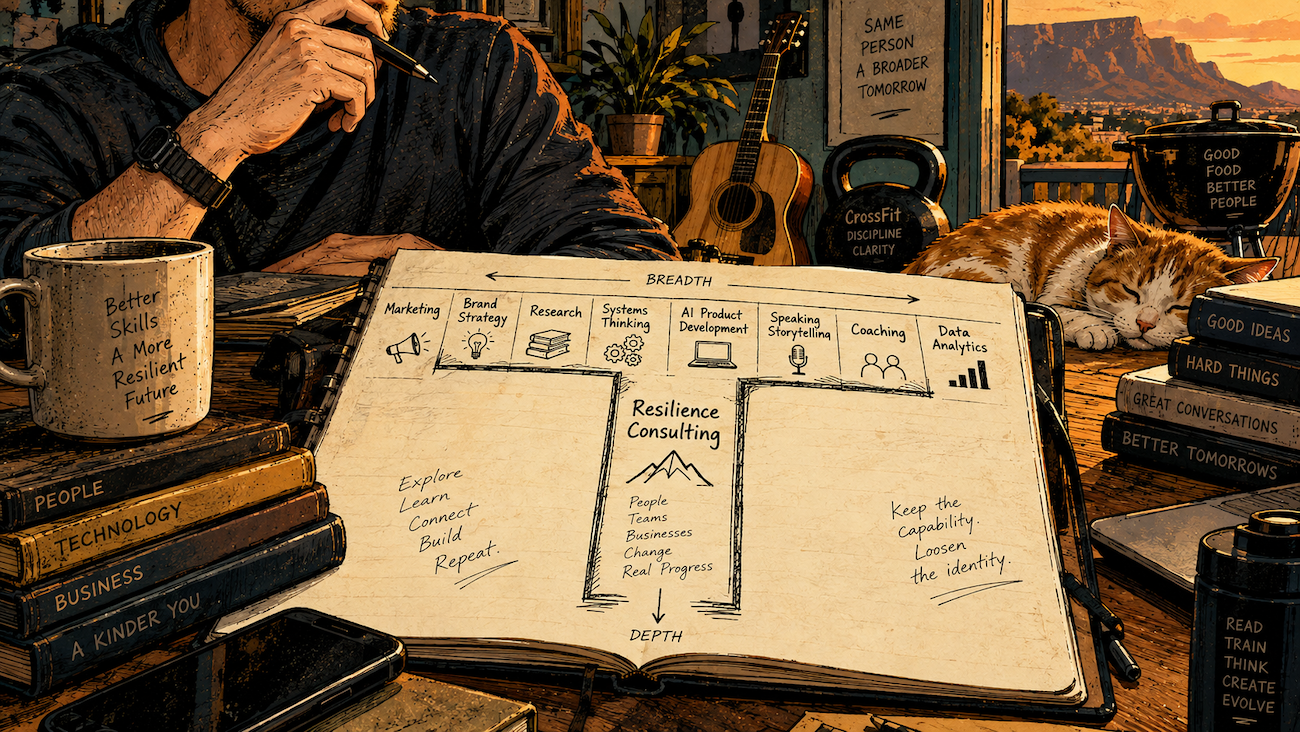
T-Shaped Skills: How to Build Career Resilience Before You Need It
Build career resilience with T-shaped skills: keep your deep expertise, broaden your capabilities, and learn how to explore and[…]
Employee Resilience: Why Purpose Matters to Business Resilience
How does employee resilience strengthen a business? Explore the role of purpose, alignment and individual capability under pressure.
No responses yet