
Most organisations aren’t struggling because their people aren’t capable. They’re struggling because those people have been slowly over-managed into mediocrity. As pressure has gone up, so has control. More process, more approvals, more layers. And while that’s meant to create alignment, it often does the opposite – it slows everything down and removes the space people need to actually do their best work.
This is where emergence in business starts to matter, even if most organisations don’t realise it yet.
It shows up in small, quietly soul-destroying ways:
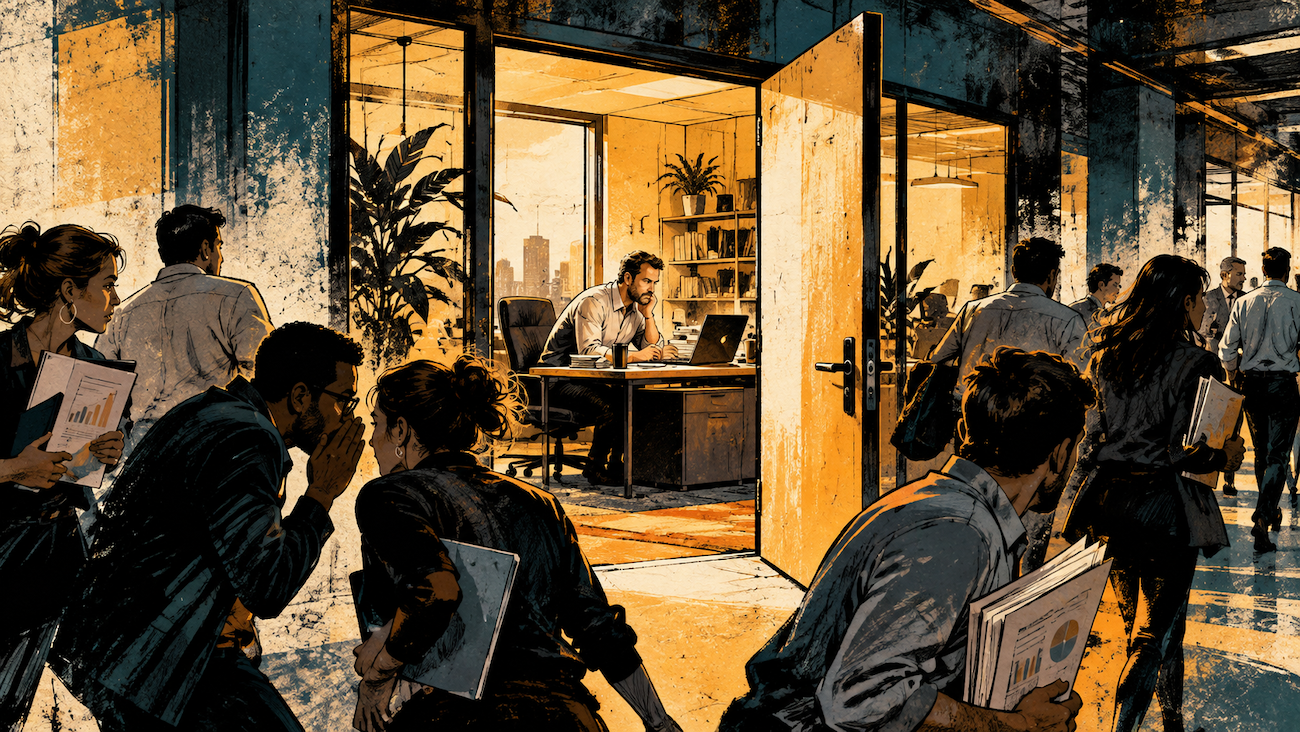
- A decision that should take five minutes gets escalated, validated, reviewed, and gently massaged until it dies of old age.
- One sign-off becomes two, two becomes three, and by the time it comes back, the opportunity has gone.
- Work starts to bend itself around process instead of outcome.
- Templates replace thinking. Onboarding documents become so heavy they slow everything down.
- And eventually, people stop bringing ideas – not because they don’t have them, but because they’ve seen what happens to them.
After a while, you don’t just stop suggesting ideas, you stop believing it’s worth the effort. We’ve built systems that look efficient on paper but feel exhausting to operate, and that’s the tension. When you step back and look at how highly effective systems actually function, they don’t look anything like this.
Bees, chaos, and emergence in business
Take a hive of bees. Thousands of tiny insects, each with a lifespan of a few weeks, somehow coordinating to keep an entire system alive. They pollinate a third of the world’s food supply, sustain ecosystems, and generally keep humanity from having to live off decorative houseplants and regret. There’s no CEO, no meetings, no strategy deck, and yet it works.
There’s no central control in a hive. No one bee telling the others what to do. Each one responds to what’s in front of it – signals, movement, need – and somehow the whole system holds together. That’s emergence: simple interactions creating outcomes no one designed directly.
This is exactly what emergent systems in organisations aim to achieve.
We’ve borrowed from nature before. Velcro came from burrs sticking to fur, and bullet trains were redesigned based on the beak of the Kingfisher to reduce noise and improve efficiency. But when it comes to how we design organisations, we’ve largely ignored the obvious lesson and instead doubled down on control.
In complex systems in business, control doesn’t create alignment – it quietly strangles it. The more tightly you try to control a system, the slower decisions become, ownership evaporates, and people disengage, not because they don’t care, but because they can’t move without triggering a compliance siren somewhere. What you end up with is something that looks beautifully organised on a slide deck but performs like a 2003 desktop running twelve antivirus programs and a dream.
It doesn’t fail dramatically. It just drags. People are still there, still working, still delivering, but everything feels heavier than it should. Work that used to feel straightforward now feels like it’s pushing uphill, and over time that weight starts to compound.
Functional, but not fine.
This is where it starts to go wrong. When work becomes repetitive, over-controlled, and stripped of autonomy, it loses novelty. No novelty means no dopamine, and without dopamine the brain stops rewarding the effort. Motivation drops, focus drops, and energy drops – not because the work has no value, but because the system has removed the signals that make it feel like it does.
Stop fixing people. Start fixing systems
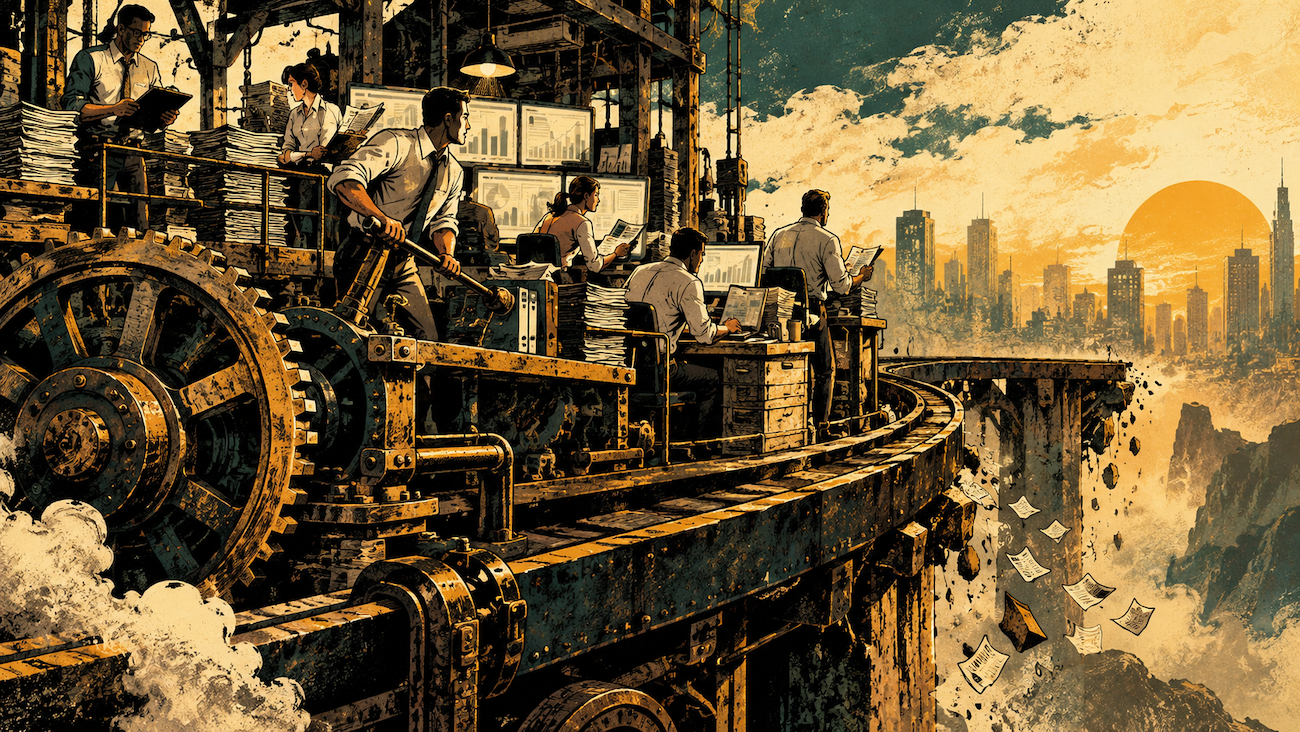
The deeper issue is that most organisations are still treated like machines – things you can optimise, control, and predict if you just get the structure right. But they’re not machines. They’re much closer to living organisms. People are the lifeblood, teams are the limbs, and the system itself is constantly responding to its environment. When you try to over-control something that behaves like a living system, you don’t create stability – you create fragility.
Organisations aren’t machines to be controlled. They’re systems to be cultivated. And when that happens emergence in the business starts to take hold.
You don’t design outcomes. You design system design in organisations through:
- Conditions – the environment people operate in: clarity, psychological safety, energy, and access to the resources they need to do meaningful work
- Constraints – the boundaries: what matters, what doesn’t, and where people have the freedom to act without constantly seeking permission
- Interactions – how work actually happens: communication flows, decision-making, feedback loops, and how people connect to each other and the work itself
Get those right and alignment starts to happen naturally. People move faster because they understand the direction, decisions happen closer to the problem, and energy flows instead of getting trapped in a compliance labyrinth. Get them wrong and no amount of control will save you.
This is also where organisational resilience is built – and where most organisations get it wrong. Individually, we are not built to carry sustained pressure alone. No single person can absorb constant change, high cognitive load, and ongoing uncertainty indefinitely without eventually burning out or disengaging.
Yet most organisations still treat resilience as an individual responsibility. More grit, more discipline, more capacity. But resilience at scale doesn’t come from stronger individuals – it comes from adaptive organisations.
Resilience might be built individually, but it’s either amplified or destroyed by the system around it.
Emergent systems don’t rely on any one part being strong enough to carry the load. They rely on decentralised decision making, interaction, and shared adaptation. A single bee achieves very little, but thousands of bees, each doing a small part, create something remarkably resilient.
The same is true for organisations. Right now, most systems do the opposite: they centralise pressure, constrain movement, and isolate responsibility, then ask individuals to be more resilient inside that structure. The result is fragmented resilience, and fragmented resilience doesn’t scale.
If you want a system to be resilient, you don’t harden individuals. You improve the capacity of each part slightly, enable those parts to connect and support each other, and remove unnecessary friction. Small gains, distributed across the system. When that happens, resilience stops being something individuals carry and becomes something the system produces.
When real pressure hits, the difference becomes obvious. Fire ants don’t panic during floods; they link together, forming a living raft that can float for weeks and move with the current until they find land. No leader, no plan – just interaction. That’s emergence under pressure, and it’s a useful reminder of what adaptive systems are capable of.
Most organisations are still trying to operate like machines in a world that behaves like an ecosystem, tightening control, adding process, and trying to predict everything upfront. What they actually need is the opposite: less control, clearer direction, and better conditions, because the goal isn’t to control the system, it’s to design it so the right outcomes can emerge.
Don’t overhaul the system. Start here:
- Remove one unnecessary approval layer this week
Find a recurring decision and push it down a level. If things speed up, you’ve found friction. If they stall, you’ve found where clarity is missing. - Make the “north star” painfully clear
Ask your team to explain the priority in one sentence. If you get five different answers, you don’t have alignment – you have a group project. - Run a friction audit
Ask: “What slows you down that shouldn’t?” Identify the top two or three blockers and remove them. Not optimise – remove.
Because the fastest way to improve a system isn’t to add more control; it’s to remove what’s getting in the way of people actually doing the work.

The Resilience to Redefine Victory: Solveig Løvseth at IRONMAN Kona
Solveig Løvseth’s remarkable IRONMAN Kona finish reveals how resilience can mean changing course, recognising our limits and redefining victory.
Leadership Blind Spots: Would You Know If Pressure Changed the Way You Lead?
Leadership blind spots can grow under pressure. Learn how changing behaviour weakens feedback and leaves leaders unaware of their
Business Resilience: When People Stop Challenging How Work Gets Done
Business resilience can weaken while performance still looks fine. One early warning sign is when people stop challenging how[…]
No responses yet