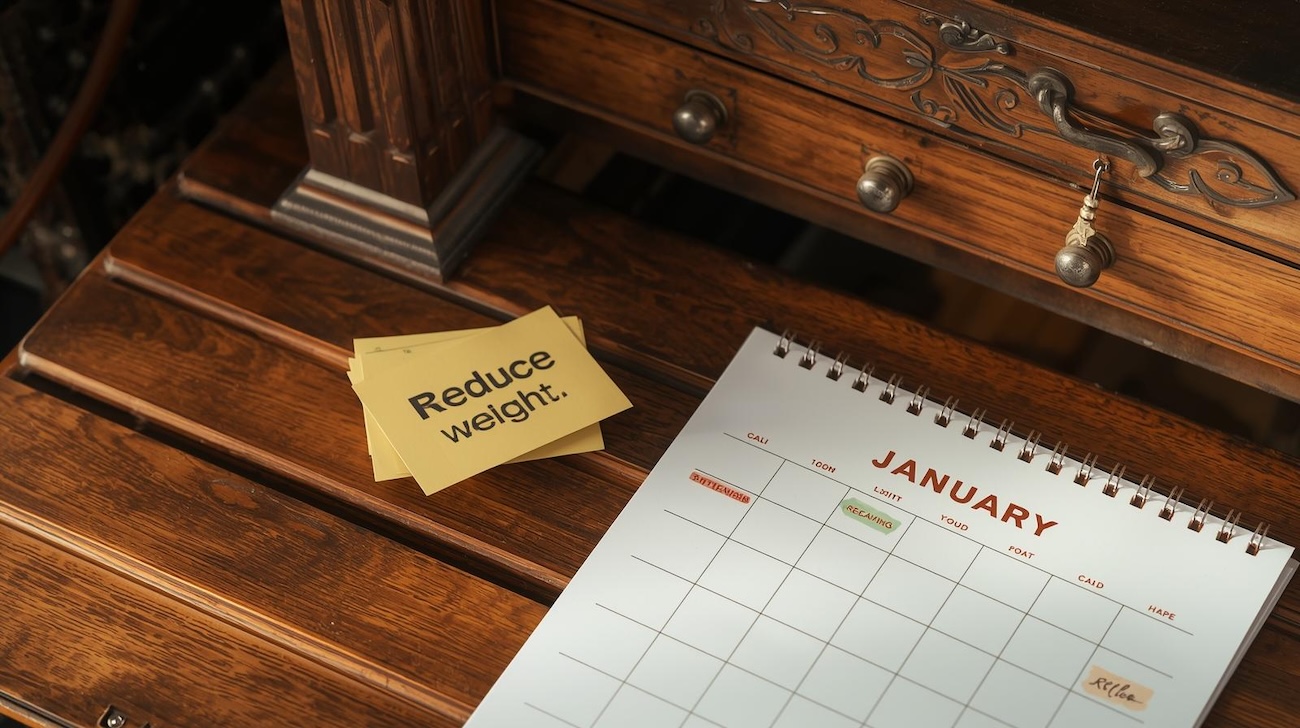
I’m writing from my desk – one of those old-school wooden ones that feels like it came from a different era. It’s got a broad surface, a solid frame, and drawers that look like they’ve swallowed years of paper, secrets, and at least one very questionable life choice. The wood has that rich, reddish warmth that makes the room feel calmer before you’ve even started… even if what you’re actually doing is replying to emails like an over-caffeinated raccoon in a suit.
Nearby is a lava lamp that hasn’t worked since before the pandemic. It’s been broken for so long I’m starting to suspect it’s not a lamp. It’s a lesson. There’s a bottle of whisky so expensive I’m afraid to open it in case I enjoy it wrong and some Scottish man appears in my lounge to judge me. There’s also a make-do LEGO iPhone holder that lets it double as a webcam, half a dozen books, a folder full of reinvention frameworks, a couple of family pics, and a Raspberry Pi that I will dabble with eventually.
And then there’s the real problem: a fat ginger cat attempting to occupy the same office chair as me, wedging himself between me and the armrest with the confidence of someone who believes the house is legally his. After the indulgence of December, I’m increasingly aware there may simply not be enough room on this chair for two fatties. One of us is going to have to adjust. He is not open to a negotiation.
Because if you’re reading this in early January, you’re probably already back in it – inbox feral, bank account wheezing, and your calendar filling up like it’s trying to win an award for Most Creative Use of Human Suffering.
That small, ridiculous moment is the whole point. You can squeeze. You can tolerate the discomfort. You can keep shifting your weight and pretending it’s fine. But at some point, the system tells you the truth: there isn’t enough space for everything you’re trying to carry.
And that’s why I’m starting the year here – not with goals, not with a new system, not with a dramatic declaration that this is my year (because that’s what everyone says, right before they quietly return to chaos and biscuits). The start of a year is one of the only times we get a natural reset. A pause in the noise. A moment where it’s socially acceptable to take stock without needing a breakdown to justify it.
That’s what I mean by sustainability. Not the “save the dolphins, buy a hybrid, move into a treehouse” version – although I’m not downplaying environmental sustainability for a second. We’ve done a spectacular job as a species of buggering things up, and the people fighting to fix it deserve medals and a nap. I’m talking about personal sustainability – the kind that decides whether you can keep moving forward without quietly running yourself into the ground.
What sustainability actually is
Resilience isn’t about taking on more. It’s about letting go of what you can’t carry without cracking something vital. And sustainability isn’t a personality trait either – it’s not something you either have or you don’t. It’s the result of how you build your life, how you pace it, and what you keep forcing yourself to drag along even when it’s clearly draining you.
It’s not heroic effort – the kind that looks impressive on LinkedIn but leaves you eating toast for dinner because you’ve got nothing left. It’s not discipline for discipline’s sake, where structure becomes a cage you rattle instead of something that supports you. Some people treat discipline like a religion. Which is fine, until you realise they’re worshipping a calendar colour-coded like a hostage situation. And it’s definitely not pushing harder just because you’ve confused stress with progress.
For me, sustainability starts with something far less dramatic and far more effective: noticing, honestly, what drains you, what creates resistance, and what keeps you stuck in “coping mode” instead of “building mode.”
Before going any further, it’s worth saying this plainly. I don’t have this figured out in any universal sense. These aren’t rules or prescriptions – they’re observations. If any of this helps you notice something you might otherwise have carried forward unquestioned, then it’s done its job.
How to let go of what no longer serves you
In 2025, after nineteen years, my South African residency finally came through. Which is a mildly insane sentence when you realise that’s longer than the eighteen years I spent growing up in Zimbabwe.
I don’t say that for sympathy, and I’m definitely not saying it for drama. I’m saying it because it revealed something I didn’t fully understand while I was still inside it: how much resilience it had been using up. Not in one loud, obvious way. In the background. Every day. For nearly two decades.
For years, a single email subject line could change my whole week – and I didn’t even realise that was a tax I was paying. Nothing says “stable adult life” like having your emotional state dictated by an inbox notification that starts with “Dear Applicant” and ends with your spirit leaving your body.
It becomes normal, that kind of strain. The admin. The uncertainty. The quiet, persistent question running in the back of your mind: how long will this last? Planning with an invisible asterisk. Making long-term decisions while keeping a mental escape hatch handy, just in case life decides to be… life.
For years, that question quietly taught my nervous system that safety was external – granted by paperwork, approvals, and timelines. Getting residency didn’t magically solve life, but it did expose how much of my resilience had been spent simply living without settled ground.
And then one day, that weight lifts.
Not with fireworks. With space. Which is an underwhelming way to describe a nineteen-year mental tab closing. But I’ll take it.
What surprised me wasn’t just relief – it was capacity. That awkward realisation that you’ve been running a low-level hum of tension for so long you forgot it was even there… until it isn’t.
And once it lifted, another thought followed immediately behind it: if this was how much energy one long-running burden had been consuming… what else am I carrying that no longer needs to come with me?
Because that’s the trap with resilience. If you’ve had to be resilient for long enough, it stops feeling like a response to circumstances and starts feeling like your personality. You begin to believe bracing is just what you do. That holding your breath is normal.
But sometimes the most sustainable thing you can do isn’t to get stronger.
It’s to finally put something down.
What letting go makes possible
Here’s the part that matters for the year ahead. When you let go of what no longer serves you, you don’t become weaker. You become available. Available for deeper work, better decisions, and bigger, scarier challenges that actually stretch you in the right direction – not just exhaust you in circles.
And from what I’ve seen – in myself and in others – this is where we often get it wrong at the start of a year. We assume the solution is addition. Add new goals. Add new habits. Add new routines. Add new disciplines. Add new pressure. It’s like trying to solve exhaustion by downloading another productivity app. Congratulations – you’ve now got insomnia, three dashboards, and a weekly report proving you’re failing faster. And an alert that says: “You have not met your wellness goals.” Cheers…
But if your system is already full – with obligations you resent, decisions you’ve avoided, roles you’ve outgrown, relationships you keep “managing,” expectations that were never yours to begin with – then every new thing costs double. Not because you’re lazy. Because you’re carrying too much.
So before you decide what you’re building this year, it’s worth checking what’s already sitting on your back.
Read these slowly and notice which one makes you slightly defensive. That’s usually the one. Either that, or you’ve just had too much December.
- The thing you keep tolerating because it isn’t exploding – it’s just quietly draining you.
- The thing you have to force – not “hard but meaningful,” more “hard because it doesn’t fit.”
- The decision you keep avoiding because you know exactly what it will require you to admit.
- The ‘temporary season’ that never ended – the pace that was meant to be short-term but somehow became your baseline.
- The recovery you never quite got – breaks happened, sure, but not the kind that actually reset you.
None of these are moral failures. They’re signals. And ignoring signals doesn’t make you resilient. It just makes the eventual cost higher – like ignoring a weird noise in your car and then acting shocked when the solution involves your bank account and a tow truck.
If you’re not sure what you’re carrying – or you can feel the weight but you can’t quite name it – this is exactly where structure helps. Not because it gives you “the answer,” but because it forces you to stop guessing and start seeing. It’s the same principle as the elephant story: if you’re only holding the tail, you’ll make decisions like the tail is the whole animal.
And if you’re thinking, “fine, but I don’t even know what I’m carrying until it bites me,” that’s exactly the point – you need a way to see it before it becomes a crisis.
That’s why I built the Titanic Diagnostic. It’s not a personality test. It’s not corporate fluff. It’s a structured way to surface where strain, friction, and resistance are building in your system – the stuff you’ve normalised, the stuff you’ve been compensating for, the stuff that’s quietly costing you energy.
The point isn’t to fix everything at once. The point is to see clearly. Because once you can see what’s weighing you down, you can make a smarter decision about what happens next: what stays because it matters, what stays but in a reduced capacity, and what gets put down because it no longer earns the energy it’s taking.
So here’s the question I want to leave you with as 2026 begins.
What is the smallest, most honest act you will do this year – one you could realistically begin this week – that moves you toward a more sustainable way of operating?
A boundary.
A pause.
A conversation you’ve delayed.
A commitment declined.
One thing removed.
One thing chosen deliberately.
Pick your inch. That’s how the year actually begins.
And if 2025 taught me anything, it’s this: you don’t need a bigger chair – you need fewer things on it. Also, you may need to negotiate with a ginger cat who thinks tenancy law is a vibe.
No responses yet