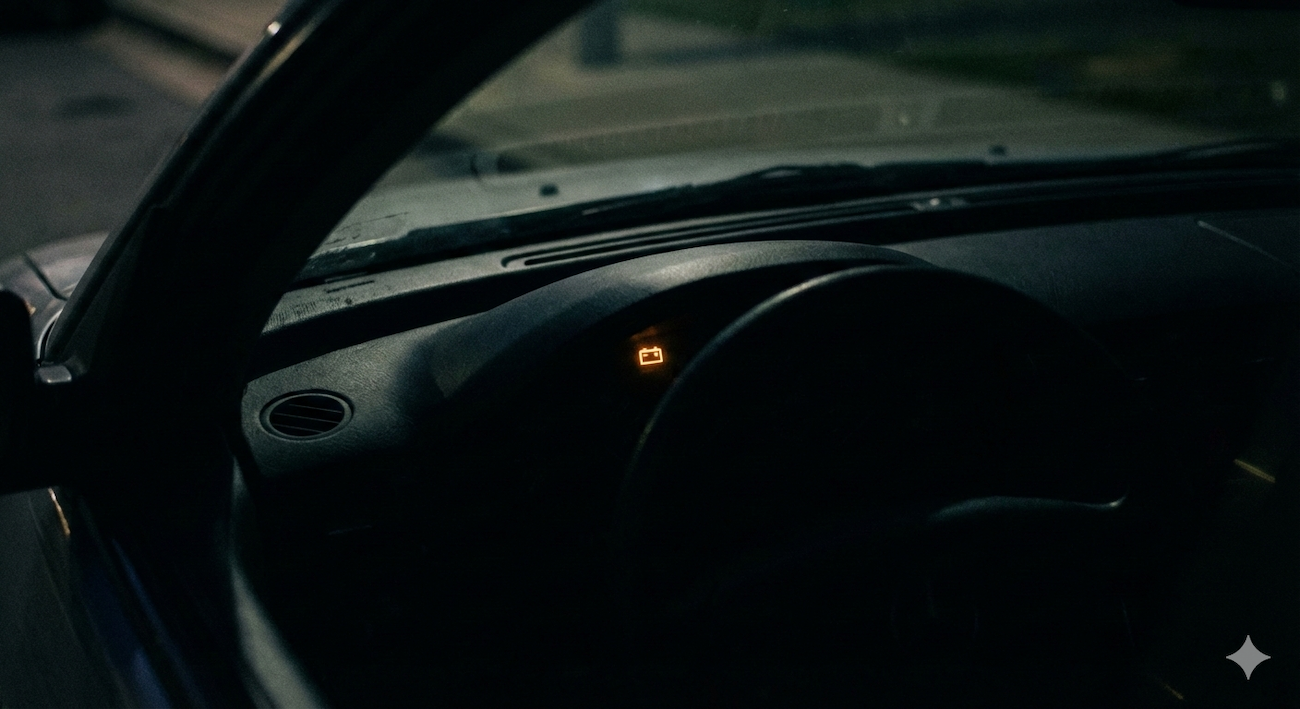
There’s a particular kind of optimism reserved for people who get warned about a problem… and then treat that warning as trivia. Two years ago, I collected my car from a major service – one of those services that doesn’t just cost money, it kicks your bank account in the teeth, steals its lunch, and then charges you labour for the privilege. This, as it turns out, was an early lesson in anticipating change, even though I didn’t recognise it at the time.
The gentleman behind the counter – a lovely man who has mastered the sacred art of relocating funds from my bank account into his – told me my battery was on its way out. Not today-out. Not “you’ll be sleeping in a lay-by with the truckers” out. Just… eventually. He added, almost as an aside, that until I replaced it, the automatic start-stop function would stop working.
Now, to be clear, this is a minor inconvenience in the grand scheme of life. Nobody’s being chased by lions. No one’s losing a limb. It’s the sort of “problem” you only notice because modern cars have been designed to do things without asking permission. Start-stop is one of those things. It’s fine. It’s helpful. It saves fuel. It’s the sort of feature engineers get proud of. I still want to throw it into the sea.
I want the car to go when I put my foot down. Not put foot down, wait for the engine to wake up from its little nap, and then, after a brief internal conference call, we may proceed.
So when he said the start-stop would stop working until the battery was replaced, I didn’t hear “maintenance.” I heard “temporary upgrade.” And because I’m a rational adult who definitely makes responsible decisions, I left the battery exactly where it was and drove off with my accidental feature improvement.
Six Months of Bliss
For the next six months, life was glorious. Foot down, car moves forward. This is, I believe, how Jeremy Clarkson would insist vehicles were meant to function: loud, immediate, obedient. The warning faded neatly into the background as “something I’ll deal with later,” which is the universal language for “I’m about to create a future version of myself who will absolutely hate me.”
This is one of the great traps when you’re anticipating change before it happens: when nothing has gone wrong yet, it’s very easy to confuse absence of pain with absence of risk. Foundations fail politely. Quietly. They give you time. And if you misread that time as safety, you stop paying attention.
The Universe Starts Sending Invoices
It began with me being the idiot. Not “a bit silly.” Not “momentarily distracted.” Full idiot. The fat, fleshy idiot who drives the vehicle. Me. Whenever my wife and I go anywhere, I’m usually first into the car in the garage. I sit and wait while she does whatever mysterious, important pre-departure rituals are required. The waiting time can range from fifteen seconds to long enough for an entire civilisation to rise and fall. On this occasion, it was the latter.
I’d opened the boot – a tailgate that lifts up like it’s doing a slow, arrogant salute – thrown some things in, and sat waiting. Time passed. The car warmed up. I aged visibly. Eventually, boredom won. I pulled out of the garage. Or at least I tried. Because I had been waiting for so long that I’d completely forgotten the boot was still open.
The boot window met the garage door with a spectacular crash that sounded like a chandelier being hurled into a landfill. The garage door, it’s worth noting, was one of those old-school tilt-up doors, the kind that looks like it was designed to keep out marauding hordes rather than hatchbacks. Solid. Heavy. Deeply unyielding. Its weight alone sent a very clear message. The glass didn’t so much break as detonate, exploding into a million glittering confetti shards while the door stood firm, radiating a quiet, Gandalf-level authority: you shall not pass!
Insurance were called the next day. Not dramatically. Not heroically. Just the grim little phone call where you try to sound like a functioning adult while your soul quietly slips out the side door for a cigarette. They sent someone to replace the window. The smash-and-grab couldn’t be done at the same time, which felt less like logistics and more like the universe saying, “No no, this is a series now.”
That weekend we went away. On the way home, coming through a pass, we had a tyre go. It didn’t go in a dramatic movie way – no smoke, no sparks, no heroic slow-motion steering – it just quietly gave up, like a middle manager in November. Because it was a pass, there was nothing to do but crawl through to the other side where we could pull over.
The next day I found myself at the tyre place, where a man with unsettling calm explained that the tyre was beyond saving and I’d need two new tyres. Not one. Two. No clever fixes. Just a clean, decisive doubling of the problem. He had clearly attended the same training academy as the service manager – a curriculum focused almost entirely on the precise, efficient relocation of funds from my bank account into his.
New tyres on, I headed across town to finally get the smash-and-grab fitted. It went smoothly. Hassle-free. Almost suspiciously so – like the universe was pausing for dramatic effect. I arrived at the office the next day with a vehicle that had now had a major service, a window replacement, and two new tyres. It was in great shape. I was almost proud.
And then a gum tree tried to kill my car.
I parked in one of those big public car parks with beautiful gum trees giving shade. Very picturesque. Very serene. Very “this is lovely.” One of the branches, heavy enough to trouble an Olympic weightlifter, had come down on my windscreen. Not on. Through. It was lodged there, like the tree had decided it needed to be closer to me emotionally.
They did believe the insurance claim. Somehow. They replaced the windscreen and left. I watched them drive away with the kind of gratitude normally reserved for rescue helicopters. Finally, I thought, we are done with this.
We were not.
Because while changing the windscreen, they’d left the radio on. Normally, not a problem. For anyone with a battery that isn’t living on borrowed time like a soap-opera character in their final season.
And this is when the emotional side finally kicked in.
No starting the car. No debating it. No workaround.
Immediate battery replacement.
The Point
In that moment, everything connected. Not spiritually. Logically. I hadn’t been undone by bad luck. I’d been undone by ignoring a small, boring, predictable foundation issue because it was convenient. This is why anticipating change isn’t about foresight or brilliance – it’s about acting while the fix is still dull.
Whether you’re anticipating change in business, leadership, or your own life, the pattern is the same. Small signals appear early. They’re easy to ignore because nothing is broken yet. And when we fail at anticipating change before it happens, we don’t avoid change – we just guarantee it arrives later, louder, and more expensive.
This is how to anticipate change in practice: protect foundations before chasing performance. Do the quiet maintenance. Create slack. That’s not pessimism – that’s building resilience. It’s how you stay functional while managing uncertainty instead of reacting to it.
Ignore enough small issues and they don’t add up – they compound. Systems compensate. Slack disappears. And eventually one unimpressive failure becomes the final straw that turns “annoying” into “non-functional.”
Anticipating change is unsexy work. Micro-progressions. Quiet check-ins. Replacing the battery when it’s cheap and dull, so you’re not standing in a basement parking garage wondering how on earth this escalated so quickly.
Hard now. Easy later.
This is the first piece in a series. This one focused on anticipating change. Next comes design – shaping change while it’s still optional. Only then does implementation stand a fighting chance.
Because foundations don’t fail loudly.
They fail quietly – until everything built on them does.
No responses yet