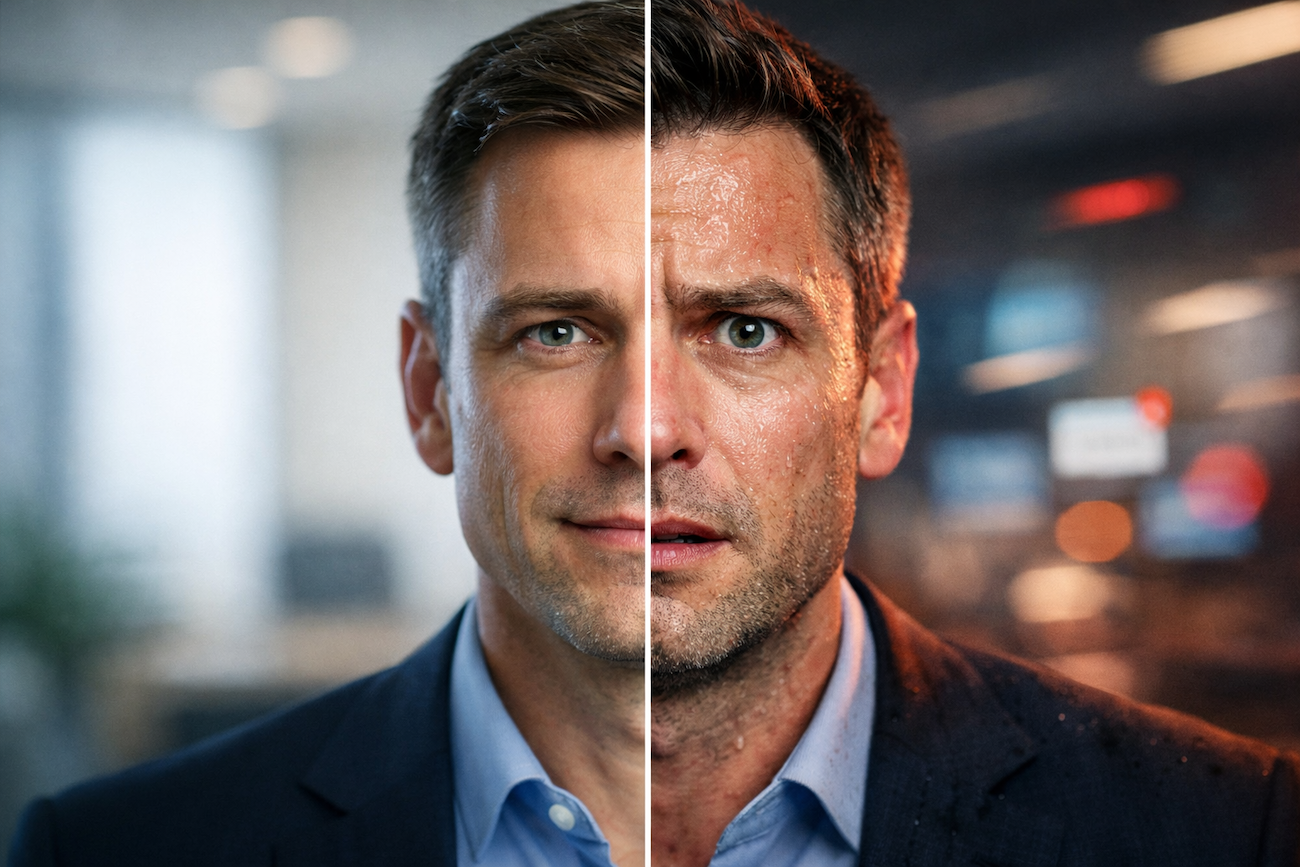
Psychological safety has the same effect on some people as saying “gluten-free” at a braai. Suddenly everyone has an opinion, nobody asked for it, and someone’s uncle is giving a TED Talk about how in the 90s they ate nails for breakfast and it made him better at spreadsheets. Which is a bold nutritional strategy, if nothing else. Because psychological safety isn’t a scented candle. It isn’t a beanbag. It isn’t a permission slip to avoid hard things. It’s the absence of interpersonal fear – the simple sense that we can speak up, ask questions, disagree, admit mistakes, or surface concerns without being publicly sacrificed on the altar of someone else’s ego. That’s not softness. That’s infrastructure. If that sounds dramatic, let’s run a quick experiment.
The Function Test
Do you remember arriving at a function completely alone? A wedding, a corporate event, a dinner where you only knew the person who invited you – and they’ve immediately disappeared to network, flirt, or “just quickly grab something from the bar” and never return. You walk in and instantly realise three things:
- You know nobody.
- Nobody knows you.
- You are not quite on dress code – not catastrophically wrong, just wrong enough that your nervous system starts whispering, you may die here.
Suddenly you don’t know what to do with your hands. Your posture becomes a weird blend of “confident adult” and “lost exchange student.” You hover near a plant like it’s an emotional support shrub and check your phone as if awaiting urgent geopolitical updates, when in reality you’re refreshing messages from someone who is absolutely not coming to rescue you. Every cell in your body is chanting: leave, leave, leave. Not because you’re weak. Because you’re human.
Then something shifts. Someone notices. They walk over, introduce themselves, and say, “I’m really glad you’re here. Come meet a few people.” And just like that, your internal state flips. Same room, same outfit, same you – different capacity. You go from threat-scanning to participating. Your brain frees up. You listen properly. You contribute instead of calculating escape routes. That shift is psychological safety in the real world – and it’s exactly what we want psychological safety at work to feel like.
The Bandwidth Theft
When we don’t feel safe, our brains don’t politely say, “Ah yes, mild discomfort, let’s carry on.” They reallocate. Attention shifts away from reasoning, learning, memory, creativity – and toward threat detection. Judgment. Rejection. Embarrassment. “What if I say something stupid?” “What if I’m wrong?” “What if this costs me?” “What if this is the beginning of a slow-motion career collapse that ends with me explaining transferable skills to a confused Labrador?”
That shift steals bandwidth. We’re still functioning – answering emails, nodding in meetings – but it’s like trying to run high-performance software while tabs are open in the background titled:
- “How am I being perceived?”
- “Is that safe to say?”
- “Did I just annoy someone?”
- “Should I have phrased that differently?”
- “Am I about to be subtly punished?”
And then someone says, “We just need you to be more innovative.” Of course we do. But innovation requires spare cognitive capacity, and spare capacity doesn’t exist in a threat-heavy system.
This isn’t fluff. It’s measurable. Google’s Project Aristotle found that the single biggest factor behind effective teams wasn’t talent or workload – it was team psychological safety. The best teams weren’t the ones with the smartest individuals; they were the ones where people felt safe enough to use their intelligence out loud.
Amy Edmondson found something equally counterintuitive: the highest-performing teams often reported more errors. Not because they were messier, but because they surfaced issues earlier, learned faster, and fixed problems before they turned into disasters. Psychological safety doesn’t eliminate mistakes. It lowers the cost of mistakes.
Psychological Safety Under Load
This matters deeply for psychological safety and resilience, because resilience isn’t about never being stressed or wrong; it’s what happens to a system under pressure. That’s why organisations are better understood as organisms than machines. Organisms have nervous systems. In a healthy organism, signals move cleanly, information flows, and energy goes toward learning and adaptation. In a threatened organism, everything tightens. We get cautious. Candour disappears. Risk tolerance drops. Decision-making narrows until the whole system behaves like it’s being chased by a bear – even if the “bear” is just a tense meeting and a budget spreadsheet.
And we are not separate from that organism. We don’t leave our nervous systems at the office door. If the system signals threat – subtle punishment, political landmines, vague roles, unclear standards – our bodies adapt. We scan more than we contribute. We hedge instead of speaking plainly. Not because we’re fragile, but because we’re calibrated.
This is also why psychological safety and feedback are inseparable. Everyone says they want a “culture of feedback,” which sounds noble right up until someone actually gives some. Without psychological safety in the workplace, feedback doesn’t land as information – it lands as threat. And once feedback feels like threat, our brains don’t integrate; they defend. We explain, justify, counter, edit ourselves mid-sentence – and if we’re really committed to the drama we start updating our CVs in our heads before the conversation ends.
Now layer this onto modern work. Previous generations had pressure, but they also had buffers. Work had edges: receptionists, office doors, landlines, physical separation. When they left, they actually left. They also had a different rhythm of output. They weren’t expected to context-switch every ninety seconds between five platforms, three chat threads, two decks, a calendar notification, and a “quick call” that becomes a hostage negotiation where everyone leaves with action items and mild trauma. The workload may have been heavy, but it was often more linear. Today, the load isn’t just volume – it’s the constant restarting of our brains.
Our phones light up at dinner. Our calendars sit in our pockets. We can’t organise a casual coffee without seeing tomorrow’s meetings. Even with boundaries, the signal leaks. Then social media adds the 24/7 highlight reel of how we should be leading, parenting, training, sleeping, investing, scaling, journaling, biohacking, and optimising our morning routine until it resembles a NASA launch checklist. All of that is cognitive load. All of that steals bandwidth.
In systems without psychological safety, that load compounds. Roles blur, ownership disappears, and the same person is doing finance on Monday, marketing on Tuesday, operations on Wednesday, and crisis management on Thursday. Output can look fine for a while – we cope, we push through – but it’s expensive. Under real pressure, the costs arrive. That’s when the organism shows its true health.
Psychological Safety vs Comfort
This is where the conversation gets stuck. One side hears “psychological safety” and assumes comfort, avoidance, and a workplace where nobody is allowed to experience a difficult feeling without filing an incident report. The other side treats it like a magic ingredient that fixes culture, performance, innovation, retention, and possibly also the printer. The annoying truth is both sides are partly right: psychological safety is powerful, and psychological safety can be badly implemented.
So here’s the distinction that actually matters.
Psychological safety is not resilience itself.
It is a resilience multiplier.
When done well, it:
- protects cognitive capacity
- accelerates learning
- improves adaptability
- reduces recovery time after shock
When done poorly, it:
- weakens standards
- slows response
- creates emotional dependency
- masks fragility
Done well, psychological safety improves performance because it keeps us useful under strain instead of collapsing into self-protection. Done poorly, it turns into comfort without standards, discussion without decisions, support without ownership – a system that feels lovely right up until reality arrives with a steel chair.
Critics accidentally make a valid point; they just aim it at the wrong target. The risk isn’t psychological safety. The risk is confusing safety with comfort and removing the tension that makes teams stronger. Resilient systems aren’t the safest systems. They’re the ones where safety and challenge coexist: where it’s safe to tell the truth and expected that truth leads to improvement; where mistakes are survivable and learning is non-negotiable; where disagreement strengthens decisions instead of silencing people; where we can say “I don’t think this will work” without being socially murdered – and we can also say “this isn’t good enough yet” without anyone collapsing into interpretive dance about their feelings.
Psychological safety can’t be installed with a workshop or declared in a values deck like it’s office furniture. We don’t become safe because someone printed it on a poster next to the kitchen and added a picture of a mountain. We become safe because the system proves it in the moments that count: how leaders respond when challenged, how mistakes are treated when exposed, how feedback is handled when uncomfortable, how decisions get made when there’s disagreement, how quickly blame appears when something breaks. Over time, the organism teaches us whether truth is safe here – or whether truth comes with consequences.
And maybe this is the part we don’t say out loud enough: we don’t lose performance because people are weak, we lose performance because systems are noisy – noisy like a WhatsApp group called “Quick Sync” that has been running for three years and now contains 14 people, 9 opinions, and one guy who only replies with thumbs-up emojis to everything, including disasters. When environments quietly threaten us through politics, ambiguity, subtle punishment, unclear standards, or constant low-grade tension, we don’t get tougher. We get more careful. We optimise for not getting caught.
A threatened system doesn’t experiment. It doesn’t admit error early. It doesn’t challenge upward. It survives. That can look like strength for a while, in the same way someone can look “fine” while living entirely on caffeine, denial, and resentment. But it isn’t strength. It’s coping.
Resilience isn’t built by telling people to “just get on with it.” It’s built by creating conditions where pressure doesn’t silence truth. Because pressure is coming anyway. Markets move. Budgets tighten. Things break. People make mistakes. Strategies fail. And if we’re honest, half the time the “crisis” is just someone sending an email that starts with “Per my last email” – which is corporate for “I’ve chosen violence.” If psychological safety is absent, every shock costs more than it needs to. Recovery takes longer. Learning slows. Candour disappears exactly when we need it most.
If psychological safety is present, and paired with standards, the same shock becomes data. It becomes something we can respond to rather than something we must defend against. Psychological safety isn’t about making work easy. It’s about making work survivable under pressure, so we still have enough cognitive capacity left to think clearly instead of flinching.
Which brings us back to that function. Before someone welcomes us in, we’re scanning, protecting, planning our exit. After someone makes it safe, we’re participating, engaging, contributing. Same room. Same stakes. Different capacity.
If we want resilience, here’s the brutal truth: we have to make truth survivable. Because if people can’t afford to be honest, our strategy isn’t fragile.
It’s already broken.
No responses yet